The parish record guide
About baptism records
For ancestors who lived before civil registration, a parish baptism entry can be the first firm link between a child, their parents and their community.
A baptism record is a church record stating when and where an individual was baptised. Parish registers in England and Wales are available from 1538 onwards and are an invaluable resource because civil birth records do not begin until 1837.
Before 1813
The earliest baptism records
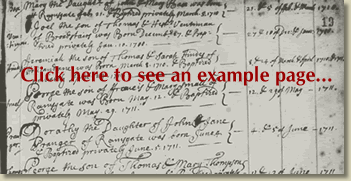
Until 1813, the amount of information recorded was usually very basic. A typical entry may include:
- the child’s name
- the father’s name
- the church or parish where the baptism took place
- the date of baptism
It was uncommon for the mother to be mentioned, although later entries may state her name. If an illegitimate child was baptised, the mother’s name was more likely to appear, often alongside a note describing the child as illegitimate.
A real register page
Look for the parish before the person.
A known parish and an approximate date can be enough to begin. Early entries are handwritten and brief, so note the spelling, witnesses and surrounding entries as well as the name you are following.
From 1813
More consistent entries
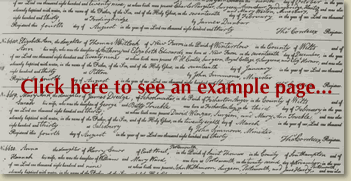
In 1813, a new pre-printed parish baptism book made entries more standardised. The form usually included:
- register entry number
- date of baptism
- child’s name
- parents’ names
- abode
- quality, trade or profession
- name of the person performing the ceremony
There was still no dedicated column for a date of birth, although some clergymen added one. A birth date becomes more common in registers from about 1860.
From 1837
When a birth record may help more
For records after 1837, parish registers are usually held by the county record office or the parish church. It is often best to start with a civil birth record, then use a baptism entry to add detail about the family’s church and place of residence.